
Never Let Me Go: The Quiet Tragedy of Being Human
The poster for Never Let Me Go looks deceptively gentle. Two young people run along a wooden pier. The sky is pale. The mood suggests a soft romance – the sort of film you might pick for a long flight when you want something calm and emotionally pleasant.
That was my assumption the first time I pressed play.
Instead, the film turned out to be something far more unsettling. Not in a loud way. There are no monsters, no chase scenes, no dramatic revelations. The horror in the film’s meaning arrives slowly, almost politely. By the time the truth settles in, you realise the story is not really about clones at all.
It is about the quiet systems that decide whose lives matter more.
The Strange Calm of Hailsham
The story begins at Hailsham, a secluded boarding school where children grow up under the watch of attentive teachers. The atmosphere feels safe. Warm even. The students paint pictures, write poems, and compete to have their artwork selected for a mysterious “gallery”.
At first, everything appears ordinary.
But the normality is slightly off, like a room where the furniture has been shifted half an inch. The teachers are kind yet guarded. Certain questions are gently avoided. The children sense that something about their future has already been decided.
Eventually the truth emerges: these students are clones, raised for one purpose: to donate their organs to others until their bodies fail.
What makes the revelation so disturbing is how calmly it sits inside the world. There are no villains shouting orders. No secret laboratories with flashing alarms.
Just polite adults. A functioning society. And a quiet agreement about whose lives will be sacrificed.
The cruelty hides behind good manners.

When “Secondary Humans” Look Exactly Like Us
The film’s ethical tension comes from a simple fact: the clones are indistinguishable from ordinary people.
They fall in love. They feel jealousy. They create art. They worry about their future the same way any young person does. Yet society insists they are somehow less real.
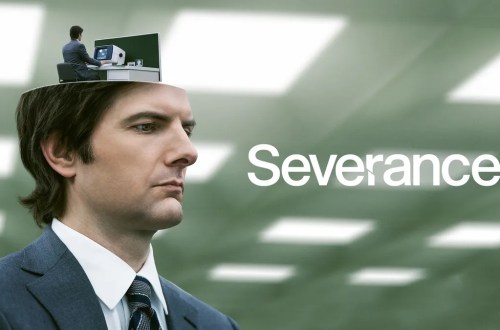
Stories about artificial or manufactured humans have explored this idea as well. In the Apple TV show Severance, a procedure separating one’s work memories from their outside lives has effectively created another version of themselves. Meanwhile, the video game Detroit: Become Human follows androids who gradually realise they possess emotions and autonomy. Those stories focus on the moment when beings created for a particular purpose begin to question the lives they have been given.
Never Let Me Go takes a far more uncomfortable route. The clones do not overthrow the system. They do not burn the world down in protest. They accept their fate.
And that quiet acceptance is precisely what makes the film unbearable.
The Deferral: Humanity’s Favourite Illusion
Among the students, a rumour circulates.
If two people can prove their love is genuine, truly deep and sincere, their organ donations might be delayed. The system might grant them a “deferral”, a few extra years together.
Hope spreads through the rumour like sunlight through a crack in a door. The characters cling to it.
Because if love can earn them more time, then their lives are not entirely predetermined. But the idea of deferral feels familiar in an unsettling way. It mirrors a belief many people carry quietly in their own lives.
Work hard enough. Be good enough. Love deeply enough. And maybe time will reward you with a little more of itself.
But time rarely bargains. Everyone moves forward at the same steady pace. Some simply pretend the clock isn’t ticking, before the years inevitably blur into a single memory.
The Line That Changes the Film
Near the end of the story comes a reflection that lands like a quiet thunderclap.
The protagonist wonders how their lives are truly different from those of the “original” humans. After all, everyone eventually reaches the same ending. No one knows how long they will have. Suddenly the entire structure of the film shifts.
At first, we watch the clones with pity. Their lives seem cruelly shortened, predetermined, unfair.
Then the film asks a disturbing question: Are their lives really so different from ours?
They donate their bodies piece by piece until they “complete”. We give our time, our energy, and our health to systems that slowly consume us.
They know their fate from the beginning. We simply hide it from ourselves behind routines, careers, and small distractions.
The clones become less like science fiction and more like a mirror.

The Quiet Acceptance That Feels Too Familiar
Perhaps the most haunting element of the film is not the organ donations or the medical system. It is the clones’ calm acceptance of what awaits them.
They fall in love. They argue with friends. They worry about small misunderstandings. And then they go on to become donors.
No revolution. No mass refusal. Just a soft, collective resignation. That acceptance carries a sad metaphor for real life.
Many people quietly accept lives they never truly chose.
They follow paths laid out by circumstance: economic pressure, social expectation, family duty. Dreams shrink over time, slowly traded for survival.
Years pass. Responsibilities accumulate. And eventually the shape of life becomes fixed – not through force, but through gradual surrender, like Tae’s quiet toll of always being the accommodating one.
The clones’ fate simply makes this process visible. Their world is extreme, but the emotional logic feels painfully recognisable.
The Hierarchy We Pretend Doesn’t Exist
The story also exposes an uncomfortable truth about human societies: not every life is valued equally.
In the film, clones are considered expendable because they serve a purpose for others. Their suffering is justified by the benefits they provide.
But real life contains quieter versions of the same logic – Certain jobs demand bodies to wear down. Certain communities absorb disproportionate hardship. Some lives are treated as replaceable simply because they occupy the lower rungs of invisible hierarchies.
The system rarely announces this openly. It simply operates.
Never Let Me Go strips away the subtlety. It presents the logic in its purest form: a group of people designed entirely to sustain the comfort of others. And the world continues calmly around them.
Two Meanings Hidden Inside the Clones
Besides that, the clones can be read in two symbolic ways.
First, they represent the exploited. The people whose labour and sacrifice quietly support the lives of those above them.
Second, they represent something universal. Every human life has a limit – Some are long. Some are painfully short. But no one receives a guarantee about how much time they have been given.
In this sense, the clones’ tragedy is not merely that they die early. It is that they understand the truth we all try not to think about.
Life moves forward. And eventually it ends.

A Strange Question About Purpose
There is another unsettling thought hiding beneath the story: The clones spend their lives donating organs that save others. Their existence directly preserves human life.
Many ordinary people live far longer without ever doing something so meaningful. Which raises an uncomfortable comparison.
If purpose is measured by the impact a life has on others, the clones might actually live more meaningful lives than many of the people who benefit from them.
Longevity does not automatically create value. Sometimes it simply creates more time.
The Field of Lost Things
In the film’s final moments, the protagonist stands alone in an empty field, imagining that lost objects from her life have washed up there: Friends who have died. Love that faded. Time that disappeared quietly.
The scene is simple. No dramatic speech. No grand lesson. Just a person looking at the remnants of a life and acknowledging that it existed.
And maybe that is the final thought the film leaves behind: A life does not need to be long to be real.
It only needs moments that mattered – love that briefly felt infinite, friendships that shaped who we became, and memories that refuse to disappear. But it also leaves one quiet question lingering in the air.
If time is limited for everyone, and meaning is never guaranteed by how long we stay here… how many of us are truly holding on to the people and moments that give life its weight?
Because in the end, that simple plea of never let me go stops sounding like a romantic line. It becomes something far more human: a fragile wish that the connections we form, the love we stumble into, and the lives we briefly share might resist the slow pull of time just a little longer.

Cameron
Life is often just a series of scenes awaiting a final edit. Art isn't an escape; it's the only map we have for the terrain of the soul.


You May Also Like
Severance: Who Is Really Living the Life?

About Time: Why Growing Up is Something Even Superpowers Can’t Fix
