
Severance: Who Is Really Living the Life?
Lately, work has been appearing in different forms across here.
Tae wrote about reaching the point where being nice to rude colleagues no longer felt worth the effort. Arden looked at a workplace culture where doing your job is not always enough. Both made me think about how much of ourselves work can demand beyond the actual work.
Which brought the Apple TV show Severance back to my mind.
When I first encountered its premise, I honestly thought: hang on, this sounds brilliant.
You undergo a procedure that separates your work memories from the rest of your life. You go to work, enter a lift and immediately walk back out at the end of the day. No stressful meetings follow you home. No difficult colleagues ruin your evening. There are always some versions of perfect forgetting.
For anyone who has ever wanted to leave work at work, Severance initially sounds like an employee benefit designed by someone who truly gets the concept of work-life balance.
Then I looked at it more closely, and the more horrifying it became.
The Perfect Solution to Work-Life Balance…?
For anyone unfamiliar with the show, employees at Lumon Industries can undergo a procedure called severance. Their memories are divided between work and the outside world.
The original version of them outside the office – the outie – remembers their ordinary life but knows nothing about what happens during the working day. The innie, meanwhile, wakes up only inside Lumon and remembers nothing of the outside world.
At first glance, the arrangement seems wonderfully simple. You still earn a salary, and go home to your family or friends. You just never have to experience the unpleasant bit in between.
That was how I initially understood it, anyway.
I assumed the innies would retain the memories from before they underwent the procedure. Perhaps they would remember who they were, what they loved and why they had agreed to this strange arrangement. They would simply lose access to memories formed outside the office afterwards.
But that is not how it works.
The innie wakes up with no memory of the life that came before Lumon. No childhood. No home. No old friends. No idea what they look like outside the identities defined for them. They know their name, but not the person who has spent an entire life carrying it.
Suddenly, the premise looks rather different. The work-life balance has not become perfect. We were simply looking at it from the side designed to look good.
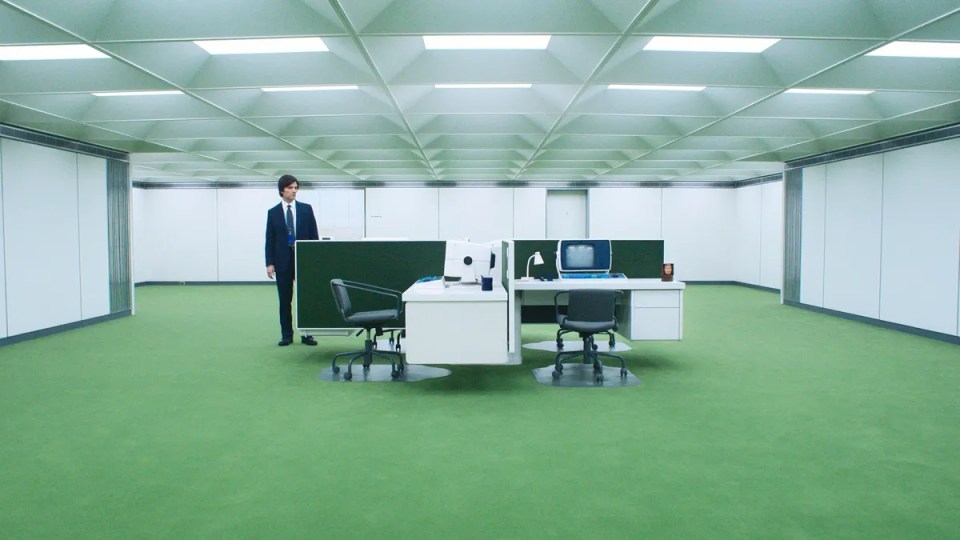
Leaving Work, Without Ever Going Home
This was the detail that changed the show for me.
Imagine finishing work. You walk towards the lift. The doors close.
Then they open. And you are back at work, not the following morning from your perspective – immediately.
The outie experiences the opposite. They enter the lift in the morning, and the next thing they know, they are leaving work. Eight hours have disappeared.
The same period of time is experienced completely differently by the two versions of the same body.
For the outie, work barely exists. For the innie, almost nothing else does.
An ordinary person with a bad work-life balance may work too much, but they still know what work is taking away from them.
They have been home. They have had a weekend. Even if they are exhausted and spend most of Sunday dreading Monday, at least Sunday belongs to them. At least they get to live their life.
The innie does not consciously experience the journey home, dinner, sleep or a holiday. They do not know the particular joy of finishing work on a Friday because, from their perspective, leaving on Friday and arriving on Monday are almost the same moment.
They never actually get to go home.
The lift is supposed to separate work from life. For the innie, it does something much crueller: every attempt to leave simply returns them to the beginning of another working day.
That is when I stopped seeing Severance as an extreme version of work-life balance.
How can you have work-life balance when, as far as you know, there is no life outside work at all?
All Work, and What Is Left of Life?
The innie’s problem is not simply that Lumon makes them work too much. It is that their existence has been reduced to a function.
They cannot remember the people who raised them. They cannot decide to meet an old friend after work. They cannot choose to change careers or move somewhere else.
Their outie may technically be doing all those things, but those experiences belong to somebody they cannot remember being.
From the innie’s point of view, they arrived at Lumon and found themselves already employed. Somebody else had signed the contract, and gets to decide whether they continue.
That reminded me of something I explored previously through Never Let Me Go: the unsettling idea of a secondary human. In that story, human lives are organised around a purpose assigned to them by others.
Severance arrives at a similar discomfort from a completely different direction: It does not create another body. It creates, or perhaps reveals, another consciousness inside the same one.
Our past matters because it tells us how we became who we are. Our relationships matter because our loved ones remember things about us that we might have forgotten ourselves. Even an uncertain future gives us somewhere to imagine ourselves going.
The innie has almost none of this. All they have are a workplace, colleagues and whatever small pieces of identity they manage to create between the fluorescent lights.
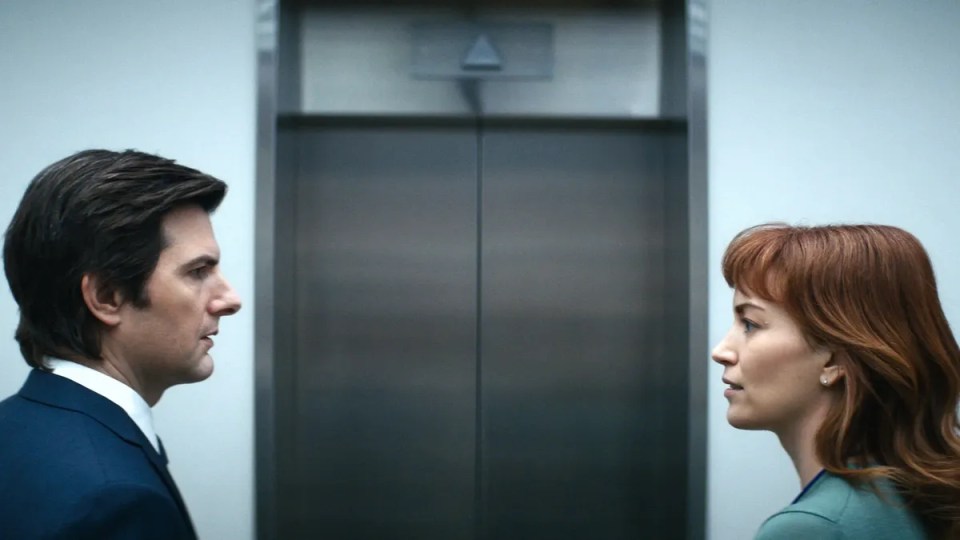
When Becoming People Actually Feels Cruel
Of course, this is where things become more complicated.
Despite everything Lumon has done to reduce the innies to workers, they do not simply become smaller versions of their outies. Some even seem simpler, brighter or more open than the people outside. Without carrying any grief, disappointments and life-hardening experiences, they can approach the world with a curiosity their outies may have lost.
And they also form friendships, develop loyalties, resent the people controlling them, and want things that have nothing to do with work. And they fall in love.
That raises one of the most fascinating questions in Severance: if an innie develops romantic feelings for someone, whose feelings are they? The body belongs to the same biological person, but the outie may have a spouse, history and desires completely unknown to the innie.
It would be convenient to say those feelings are less real because they exist only inside Lumon. But if the innie can experience love, jealousy, longing and attachment, what exactly makes those feelings less real?
There is clearly somebody in an innie. Somebody who can be afraid, fall in love and want a life beyond Lumon – and who never agreed to exist only for work.
When Horror Looks Like the Perfect Solution
This brings me back to my original reaction to Severance.
The show did not become horrifying because I learned more about its premise. The horror was there from the beginning. I simply wasn’t looking at the right person.
At first, I saw the outie as the version I relate to most in real life, but without the memory of work.
Then I started looking at the innie, who doesn’t get to go home, or more sadly, doesn’t have a home to start with.
It all depends on whose side you’re on.
Lumon’s system does not merely control its workers, but also controls what each version of a person is able to see.
It doesn’t even need to convince us that something terrible is good. It only needs to keep the people suffering outside the frame. After all, who hasn’t wanted to walk out of work and leave every difficult day behind?
But now I cannot imagine that fantasy without thinking about the one standing on the other side of the lift.

Cameron
Life is often just a series of scenes awaiting a final edit. Art isn't an escape; it's the only map we have for the terrain of the soul.

You May Also Like

Why The Banshees of Inisherin Feels Emotionally True Despite Its Absurdity

Have You Ever Been Embarrassed by Your Father? What Big Fish and I Am Sam Reveal About Understanding Our Fathers
